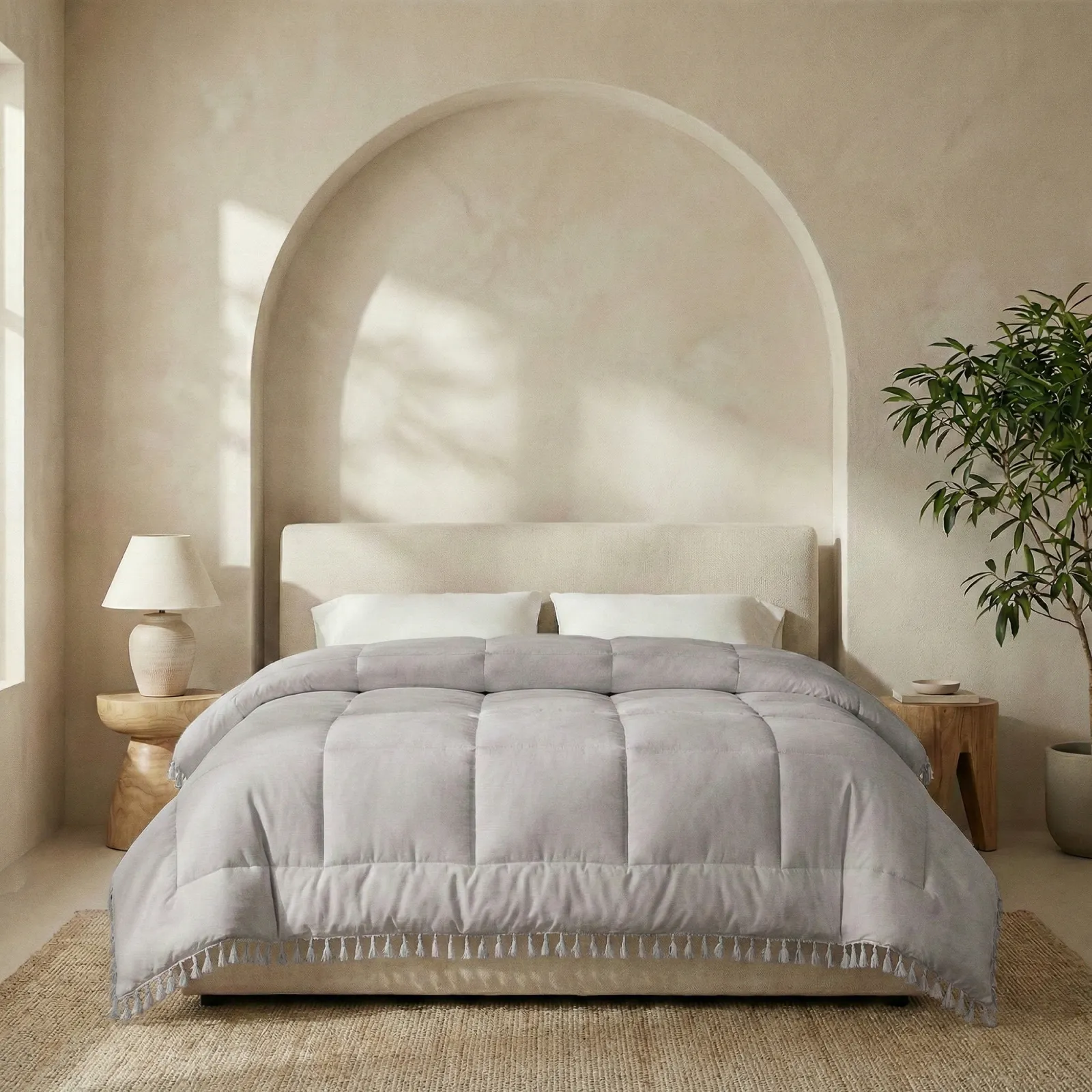










You sell a down duvet to customers who want a light, warm, high-quality product and are willing to look after it carefully. You sell a synthetic duvet to customers who want convenience, easy care and an accessible entry point. For hotels and holiday parks, it is usually the logical choice. In practice, when choosing between a down or synthetic duvet, you need both, with a clear division of roles on the shelf.
What is the difference between down and synthetic filling?
Down consists of the fine down clusters and small feathers of duck or goose. Synthetic filling is made from man-made fibres, usually polyester, in the form of hollow fibres or small balls. That difference determines almost everything that follows: weight, warmth, care and the way customers judge the product.
| Feature | Down duvet | Synthetic duvet |
|---|---|---|
| Filling | Down and feathers | Man-made fibres |
| Weight | Light for the warmth it provides | Often somewhat heavier at a comparable warmth |
| Warmth feel | Airy, soft and even | Familiar and firm, varies by filling |
| Care | Needs more care, as per the care label | Usually easier to wash and dry |
| Perceived value | Premium | Accessible |
Customers notice the weight straight away. Down gives plenty of warmth without the duvet weighing heavily on the body. A synthetic duvet often feels more substantial in the same warmth class. Some customers actually want that, because they like a duvet with a bit of weight.
The feel of the warmth also depends on fill weight and construction, not just on the filling. A lightly filled down duvet can be cooler than a generously filled synthetic one. Always advise on the basis of the warmth class of each product. You can read how to divide summer, winter and 4-season duvets in our article on buying 4-season duvets or quilts.
What about care and perceived value?
Care is where most returns and questions arise. For the customer, a synthetic duvet is usually easier: wash it, dry it thoroughly and it is ready to use. With a down duvet, it depends on the product. One can be washed at home with the right care, while another needs a specialist. The care label on each product is decisive and belongs in your product description.

Perceived value is the way customers estimate worth, regardless of the price. For most customers, down means luxury, durability and comfort. Synthetic means practical and affordable. Use this in your presentation. For down, explain why the product deserves its place in the higher segment, and for synthetic, why it is a smart, easy-care choice.
Speak about origin and quality labels only in general terms. Quality labels apply per product and are tied to a certificate. So do not mention them for the whole category, but only for the product for which you can show the certificate.
Which customer chooses which filling?
Webshops and stores with a premium or gift-oriented customer base use down as the product that sets them apart. Customers here compare on warmth, weight and look, and are willing to pay more attention to care.
Stores with high footfall and a broad customer base benefit more from synthetic. The entry point is low, the explanation is short and the risk of incorrect use is smaller. For families and student households, convenience is often more important than the filling itself.
Hotels and holiday parks do a lot of laundry and need duvets that dry quickly between guests. Synthetic usually suits them better. Down duvets are conceivable in the higher segment, provided the washing process is properly organised. When it comes to covers and sizes, look at the bed type. You can find this in our article on duvet sizes per bed.
If customers ask about a smart temperature duvet, they are talking about temperature balance during the night. Check the description of each product for the filling and construction, and do not add any promises that are not stated there.
How do you place both side by side on the shelf?
Do not set the two fillings against each other as good and bad, but as two answers to two different needs. A customer should see within a few seconds which way to go. You can find the complete range in our duvets. The following points will help you plan the layout.
- Organise first by warmth class (summer, 4-season, winter) and then by filling within that, so the customer first determines their warmth requirement.
- Place a lighter duvet or quilt with the summer products, separate from the winter duvets.
- Use the same fixed structure on the label for each product: filling, warmth class, size and washing advice.
- Keep the down range deliberately small and clear, with a few products that you can explain well.
- Build the synthetic range more broadly, as the basis for most customers.
- Have staff or the webshop copy answer the care question proactively before the customer asks it.
- Sell the matching duvet covers and the fitted sheet together with the duvet.
The same applies to a webshop. Offer a filter by filling and warmth class on the category page, and write a short, honest explanation for both fillings. A clear product page prevents customers from buying the wrong duvet and sending it back.
Frequently asked questions
Is a down duvet warmer than a synthetic duvet?
Not necessarily. The warmth depends on the fill weight, the construction and the filling. Down often gives more warmth at a lower weight, but a generously filled synthetic duvet can feel just as warm. So advise on the warmth class of each product, not just on the filling.
Can a down duvet be machine washed?
That differs per product. Some down duvets can be washed carefully at home, while others need a specialist. A synthetic duvet is often easier to care for. The care label on each product is decisive. Include the washing advice in your product description, so the customer knows what they are buying.
Which filling suits hotels and holiday parks?
Usually synthetic, because duvets there are washed often and have to dry quickly for the next guest. Down can work in the higher segment, provided the washing process is properly organised. Choose per property, based on the number of washes and guest expectations.
Do I need both fillings in my range?
It is not compulsory, but with only one filling you serve just part of your customers. A practical start is a broad synthetic core range, supplemented with a small number of down duvets as a premium choice. After one season, see what customers choose and adjust the balance.
Are you a retailer, webshop owner, hotelier or holiday park manager? Apply for a business account with MPS Textiles, and you can view the range of duvets and put together your shelf with both fillings.