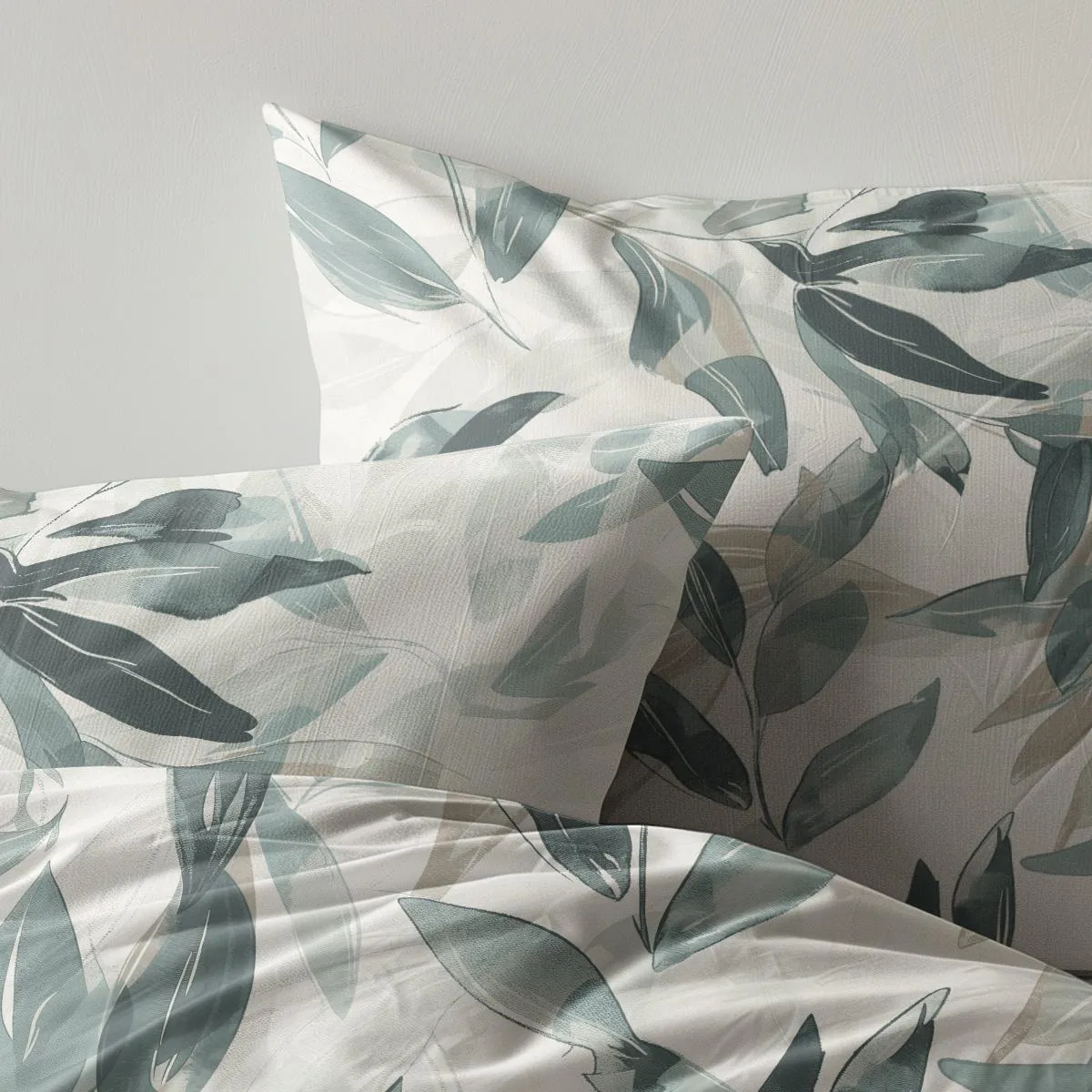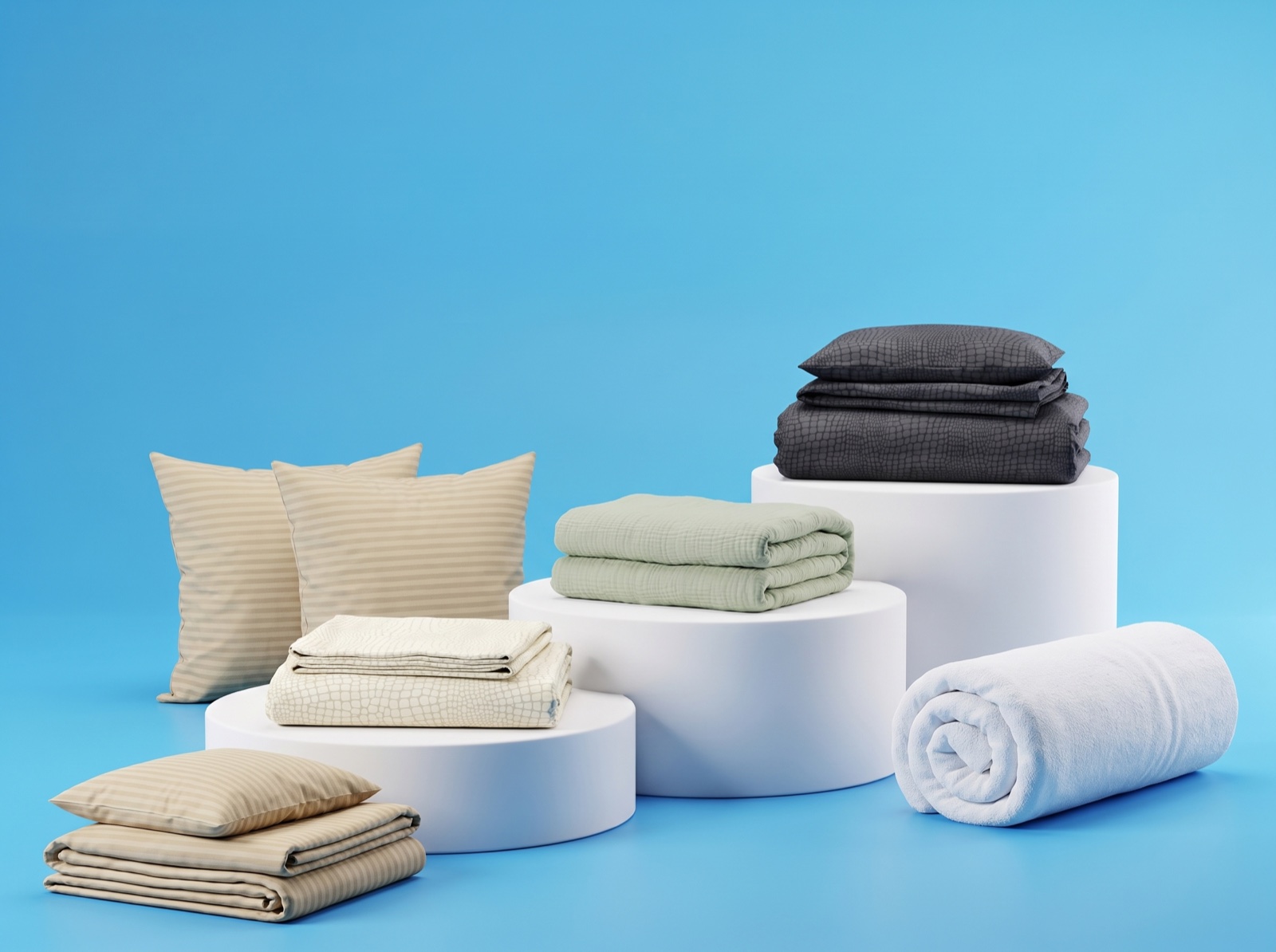
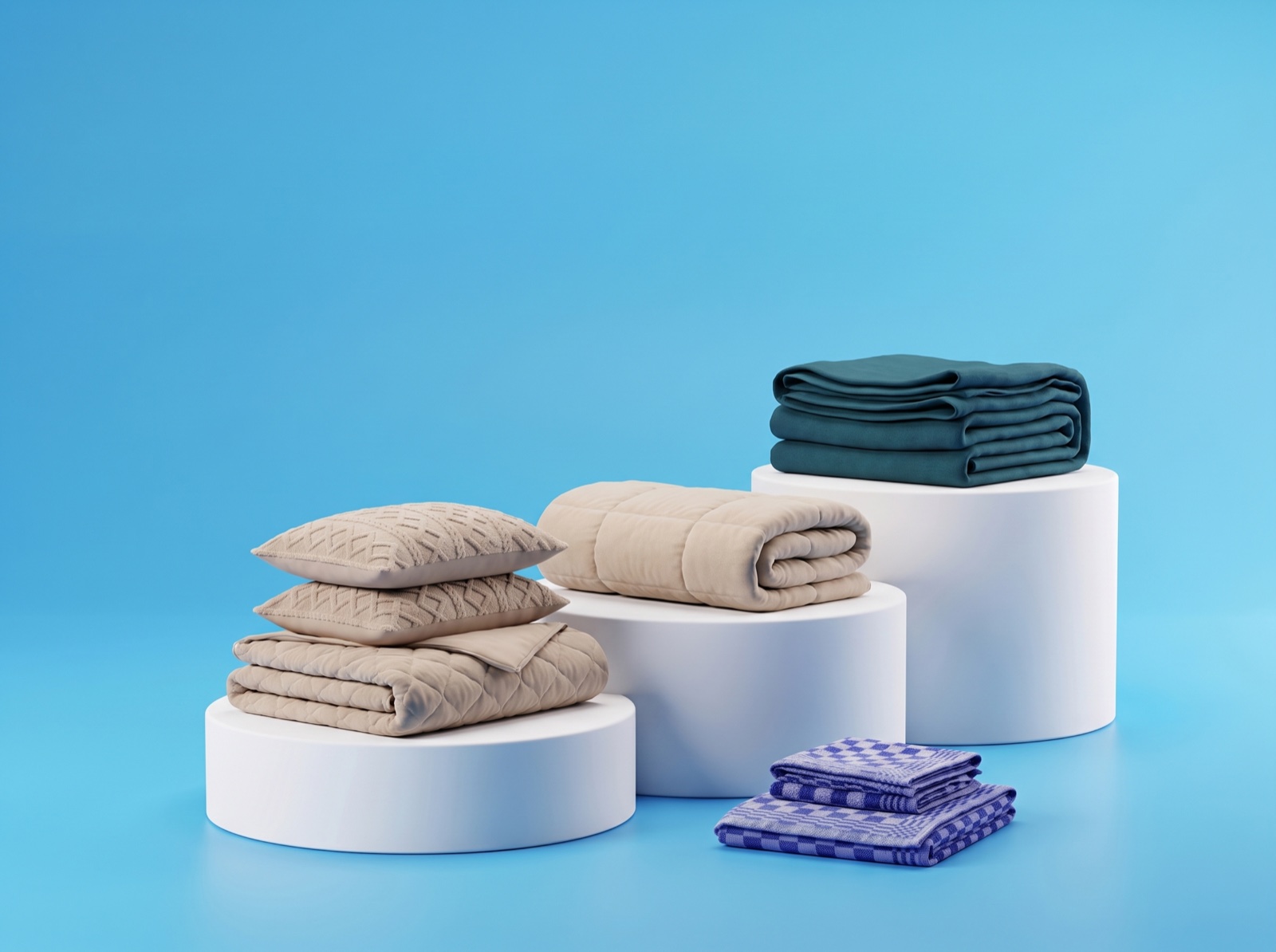
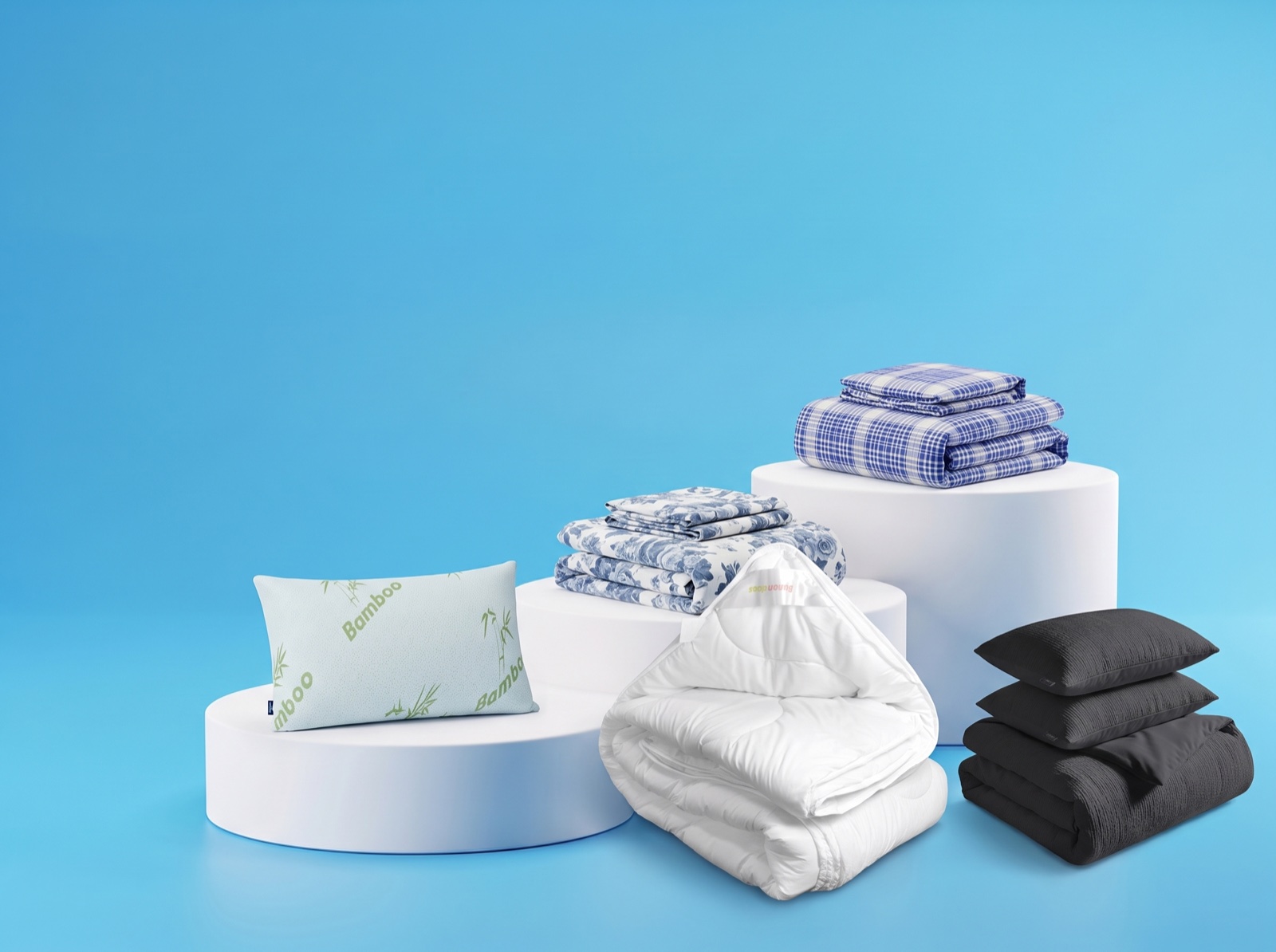


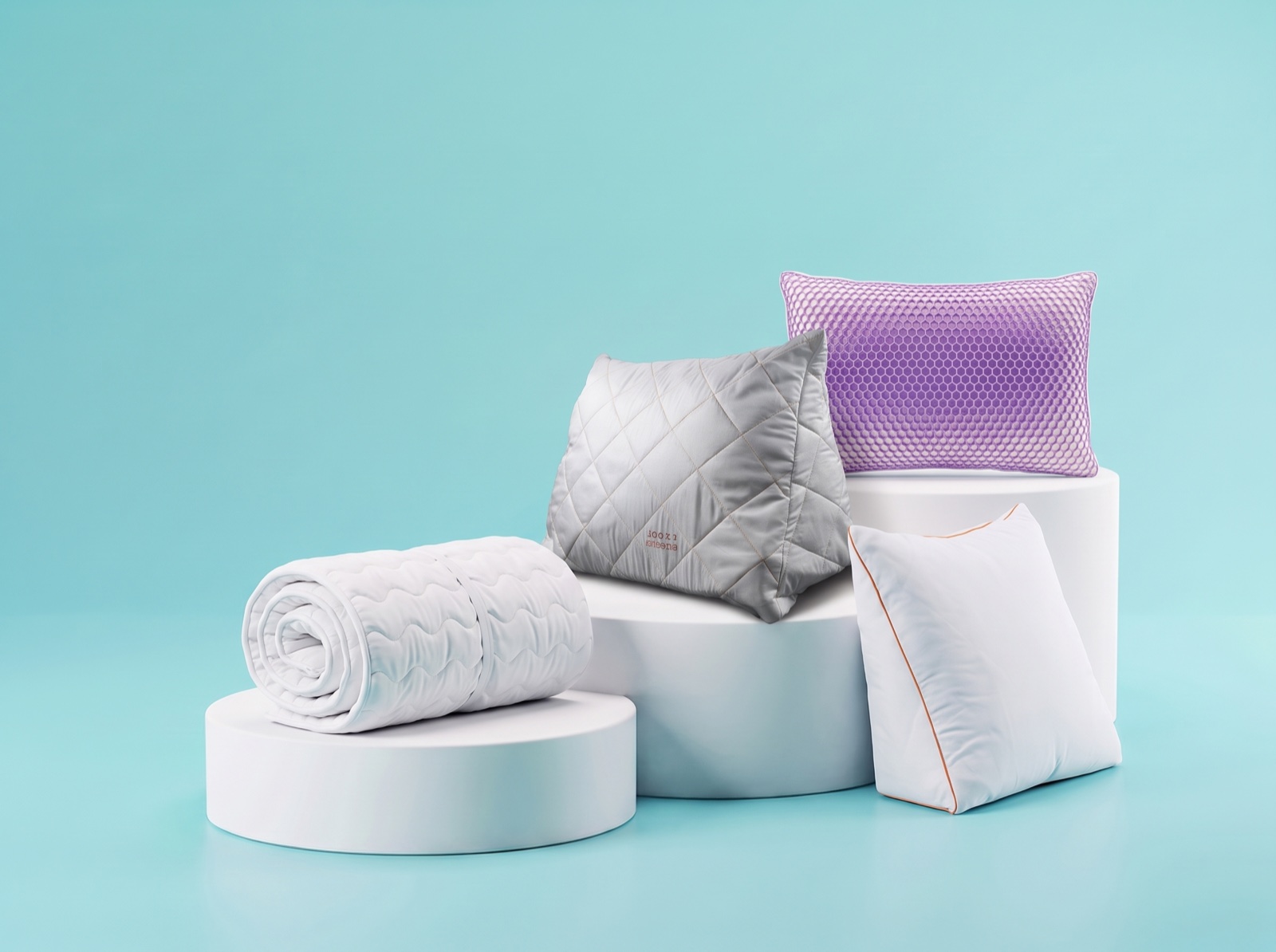


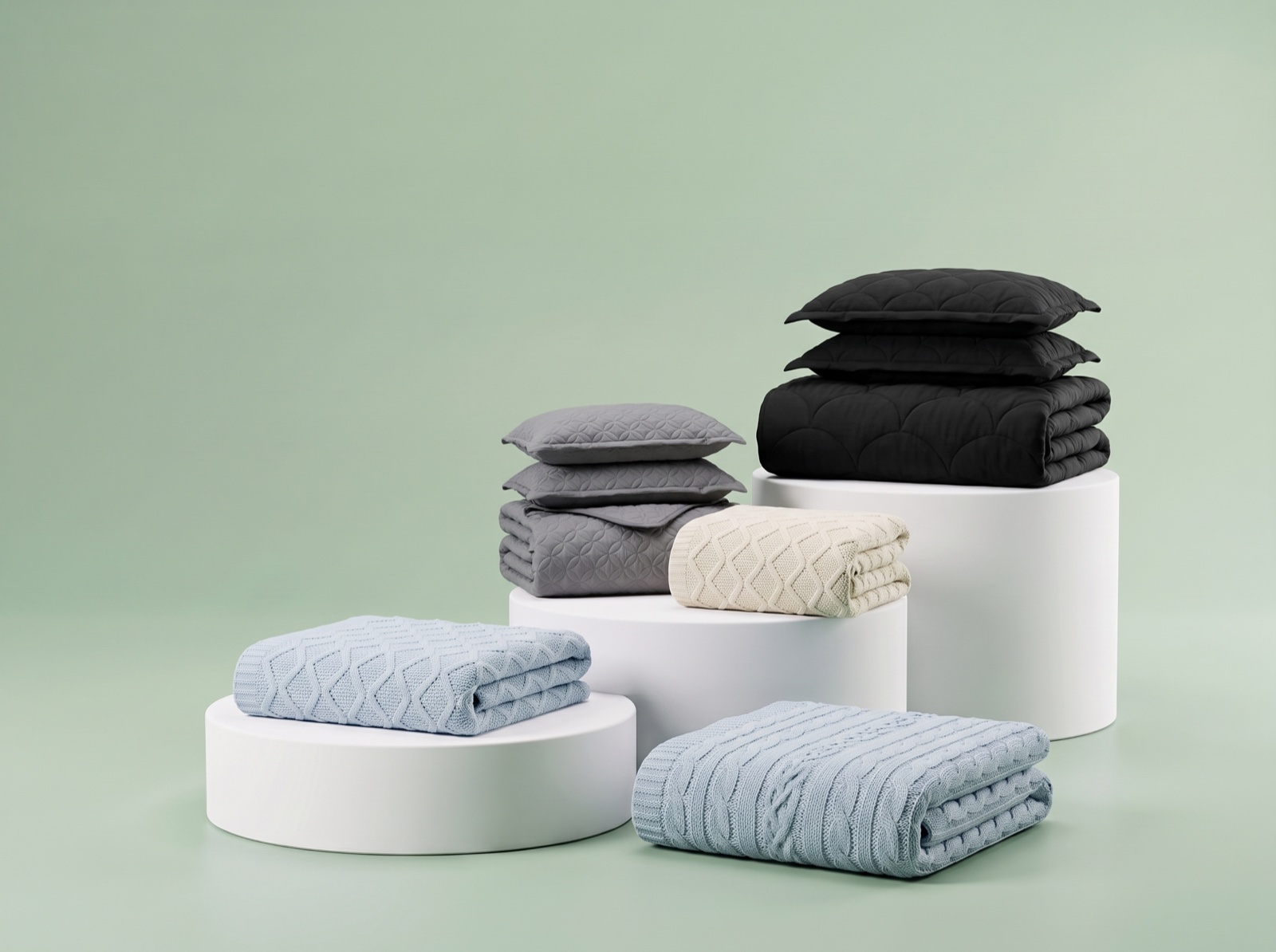

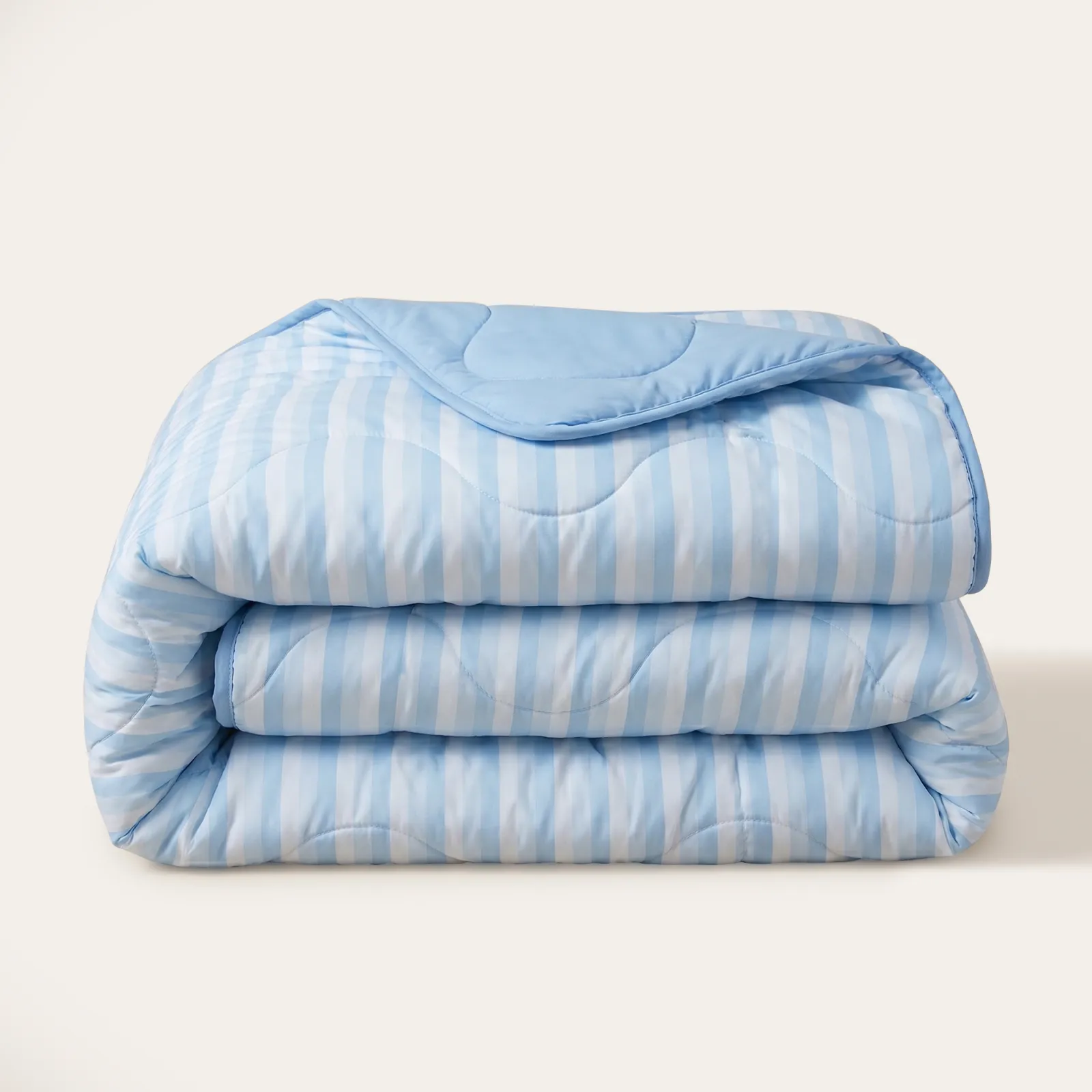
This month, buyers searched our site for cooling bedding more often than usual. That makes sense: demand for a cool place to sleep doesn't disappear with the summer. Even so, many retailers still treat it as a seasonal product. In this article, we look at the materials behind cooling bedding and at how to keep your range relevant all year round.
What does the customer mean by cooling?
When consumers think of cooling, they think of two things: a cool feeling when they get into bed and less heat retained during the night. These two properties come from different sources. The first is mainly linked to the fabric structure and the smoothness of the surface. The second is linked to breathability and moisture management.
This distinction is useful in sales conversations. A fabric can feel cool on first contact and still do little once the sleeper starts to sweat. If you can explain both properties, you will come across as more credible than a retailer who simply puts the word "cooling" on the label.
Cooling materials: what suits which shelf?
No single material satisfies every customer. A varied range works better:
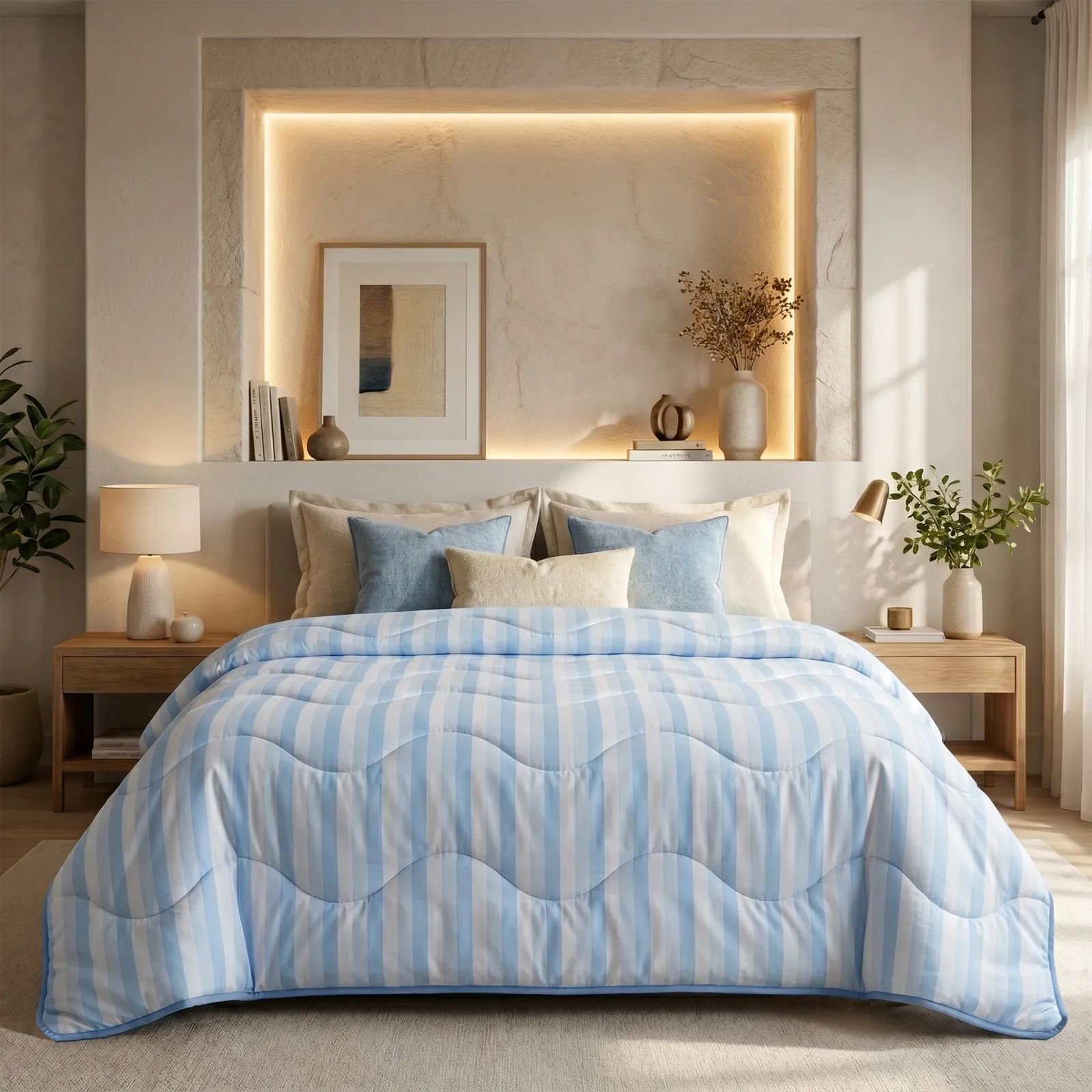
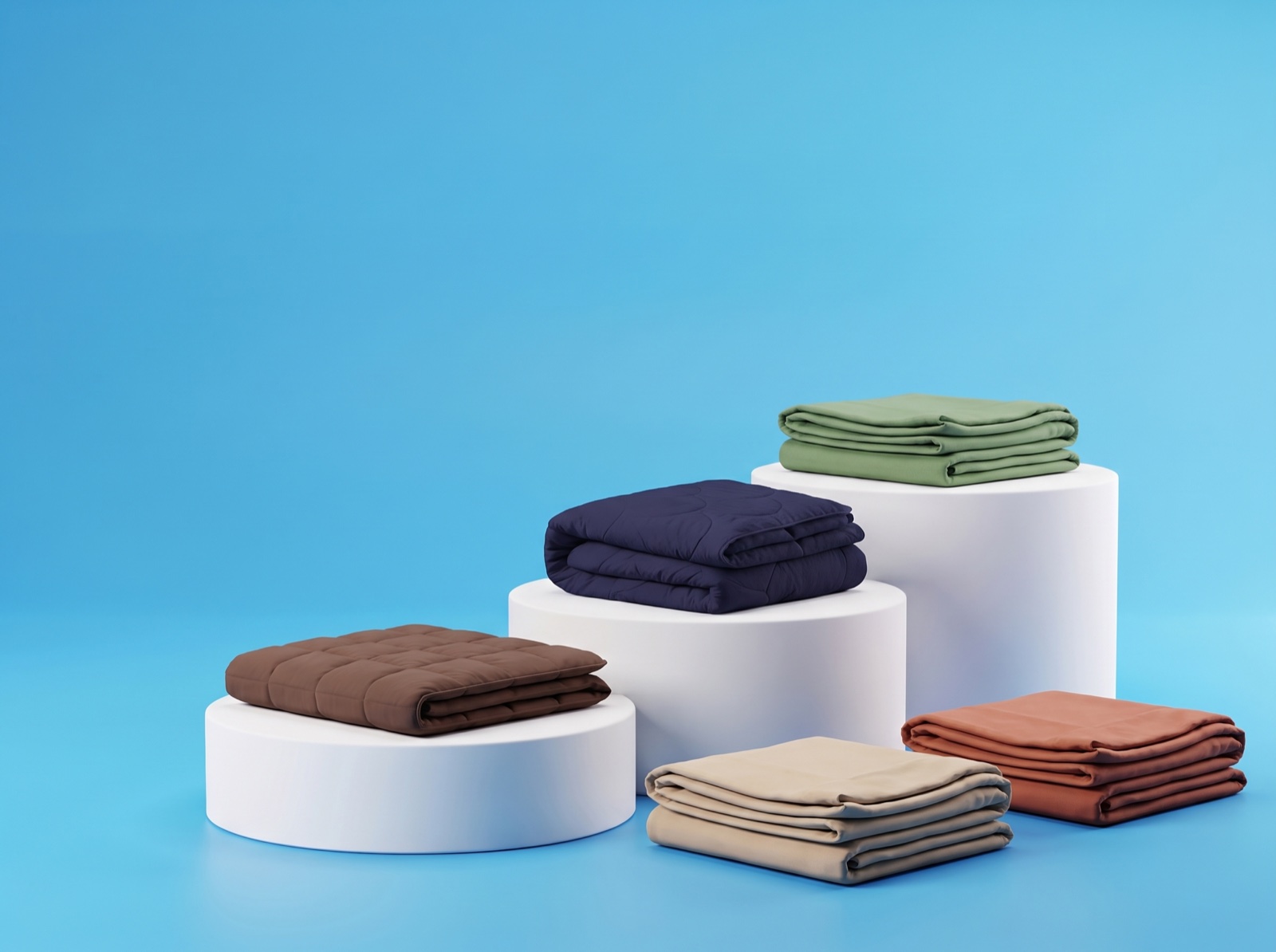
Percale and lightweight cotton weaves. An open, fresh structure with a crisp, dry feel. A familiar choice for customers who love cotton and want to keep things simple.
Cotton sateen. Smoother and more supple. It feels cool on first contact, provided the weave is not too heavy.
Lyocell and other cellulose fibres. Soft, with a fluid drape, and good at absorbing and releasing moisture. A logical choice for the higher segment and for customers who tend to feel the heat.
Linen. Naturally airy, with a distinctive look of its own. It is a matter of style: the texture and relaxed, crumpled look don't appeal to everyone.
Technical cooling finishes. Some products are treated or blended to draw heat away faster. Ask for each product exactly what the finish involves and how well it withstands washing, so that the claim on your shelf holds up.
You can find a complete overview of our range under cool sleeping.
The year-round story: why cooling doesn't stop in September
Sleeping hot isn't just a summer problem. Well-insulated homes, heated bedrooms and a duvet that is too warm all lead to restless nights throughout the year. People who are prone to night sweats also look for a solution in winter.
That is why it makes sense to present cooling not as a separate summer promotion but as a choice within your regular range. Think of a cool-feeling duvet cover on a duvet in a lighter warmth class. Or a cooling fitted sheet beneath a warmer duvet for couples with different sleeping needs.
The same applies to hotels: guests expect a comfortable sleeping temperature all year round, whatever the weather outside. A breathable material that washes well is then more important than a summery image.
Practical tips for buying and presentation
- Choose a limited number of materials and make sure they differ clearly from one another, for example percale, sateen and a cellulose fibre.
- On the shelf or in the product description, explain what the material does rather than just stating "cooling".
- Combine duvet cover, fitted sheet and pillowcase in the same fabric, so that the cool feeling is complete.
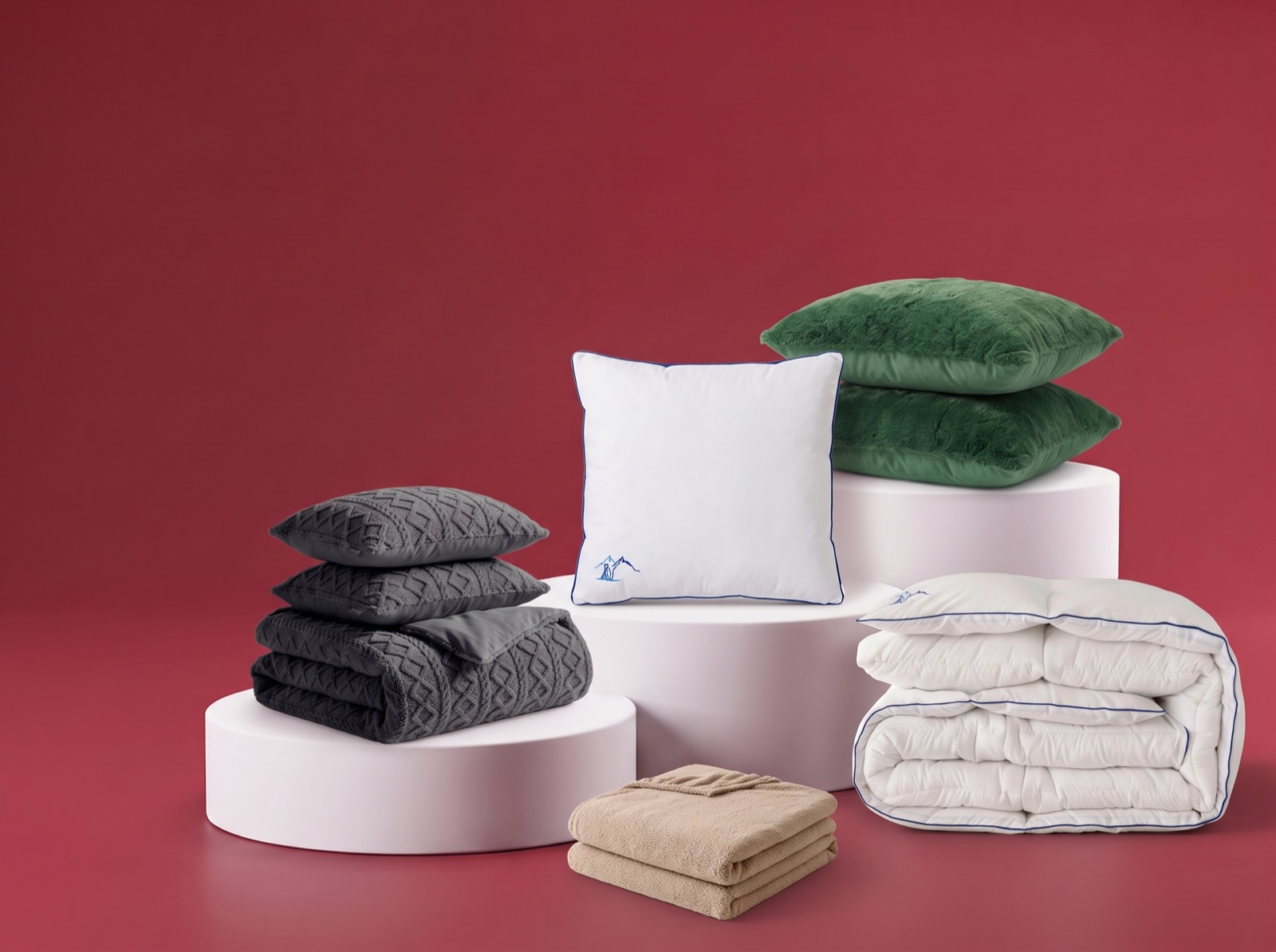
- Present cooling bedding alongside duvets and pillows too, not only in a summer corner.
- Check the washability of each product and make sure the care instructions are clearly visible on the packaging.
- For quality labels such as OEKO-TEX, always ask for the certificate for each product.
- Train your staff to ask about sleeping position and temperature sensitivity before recommending a fabric.
Frequently asked questions
Is cooling bedding only suitable for summer?
No. People who tend to feel the heat, use a warm duvet or sleep in a warm bedroom also benefit from it in autumn and winter. If you make it part of your permanent range, it stays relevant outside the summer too.
Which material is the coolest?
That depends on the customer. A dry, airy fabric such as percale works for some, while a smooth sateen weave or a soft cellulose fibre suits others. A varied range means you won't miss out on customers.
How do I substantiate cooling claims to customers?
Stick to what you can explain: the fibre, the weave and the finish. Ask your supplier for product information for each item, and avoid claims you cannot back up.
Would you like to add cooling bedding to your collection or to your hotel? Request a retailer account with MPS Textiles. We will be happy to discuss which materials suit your customer group and shelf.