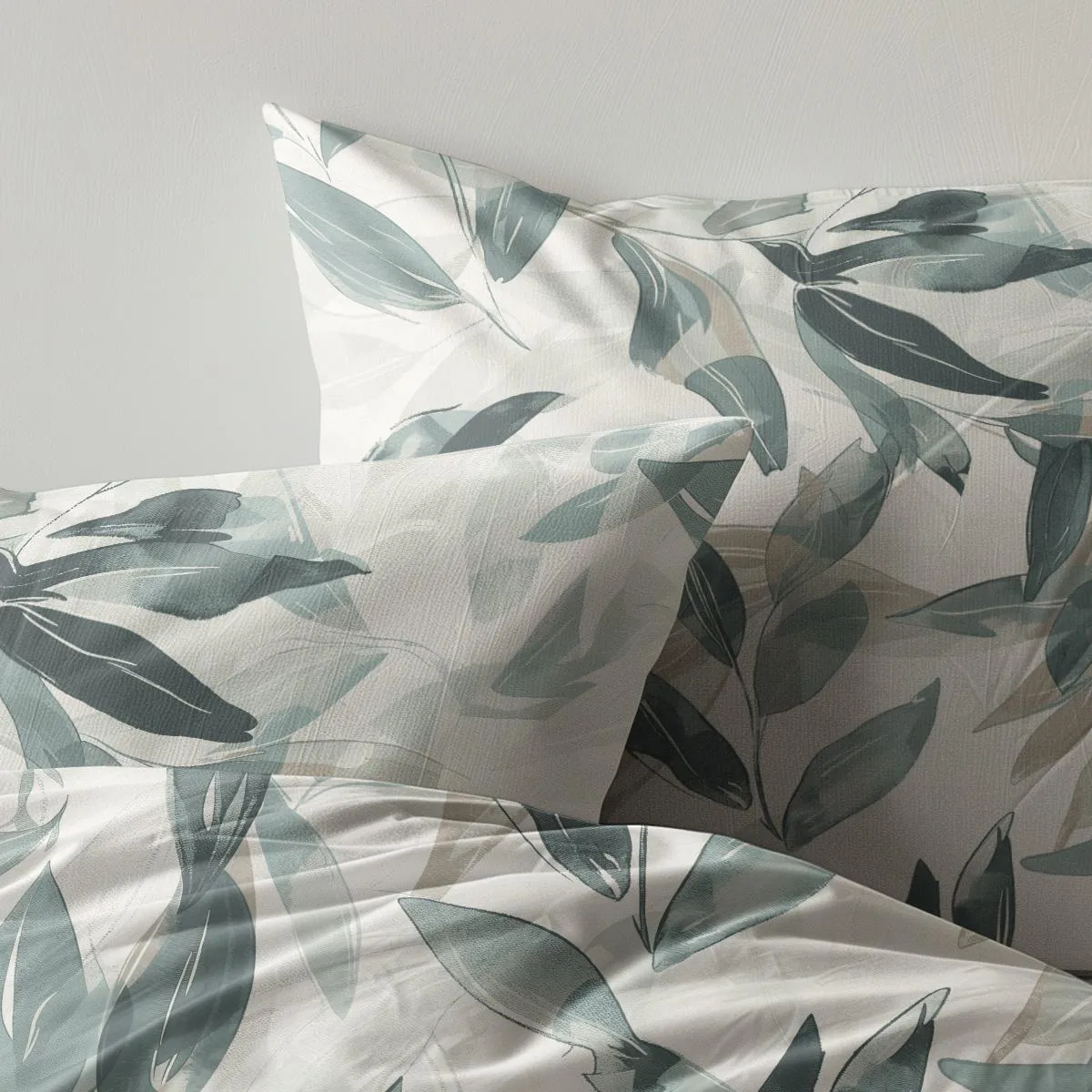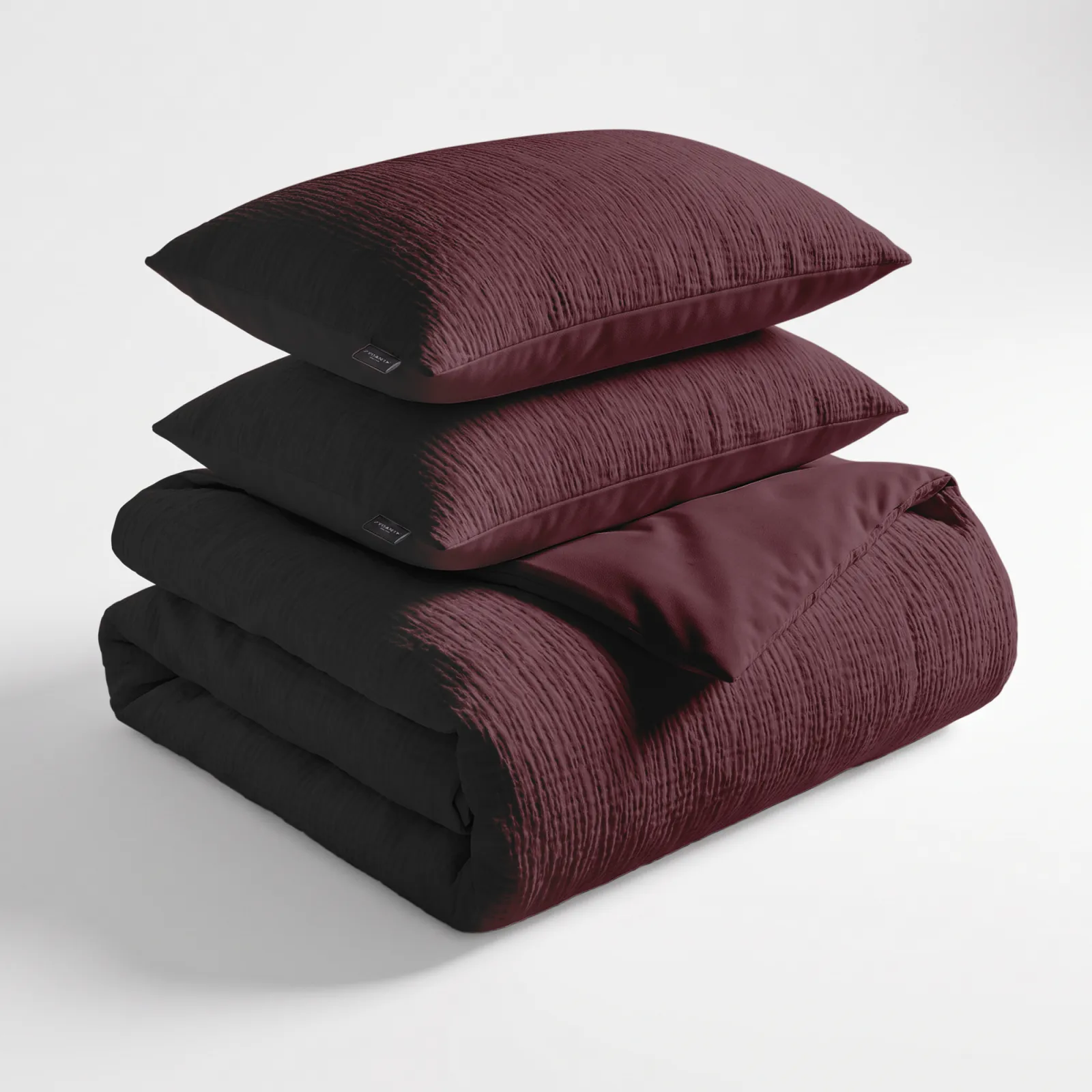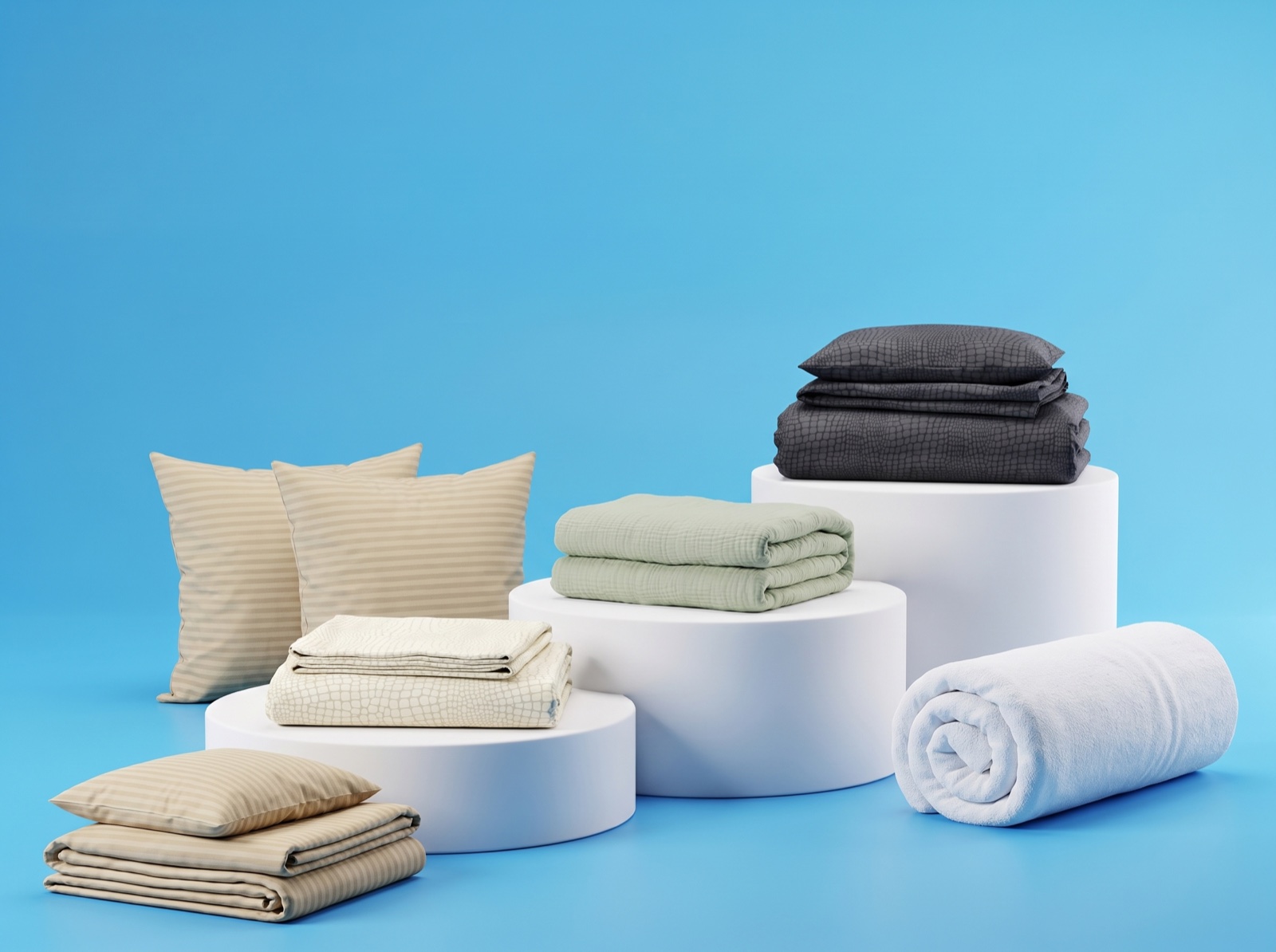
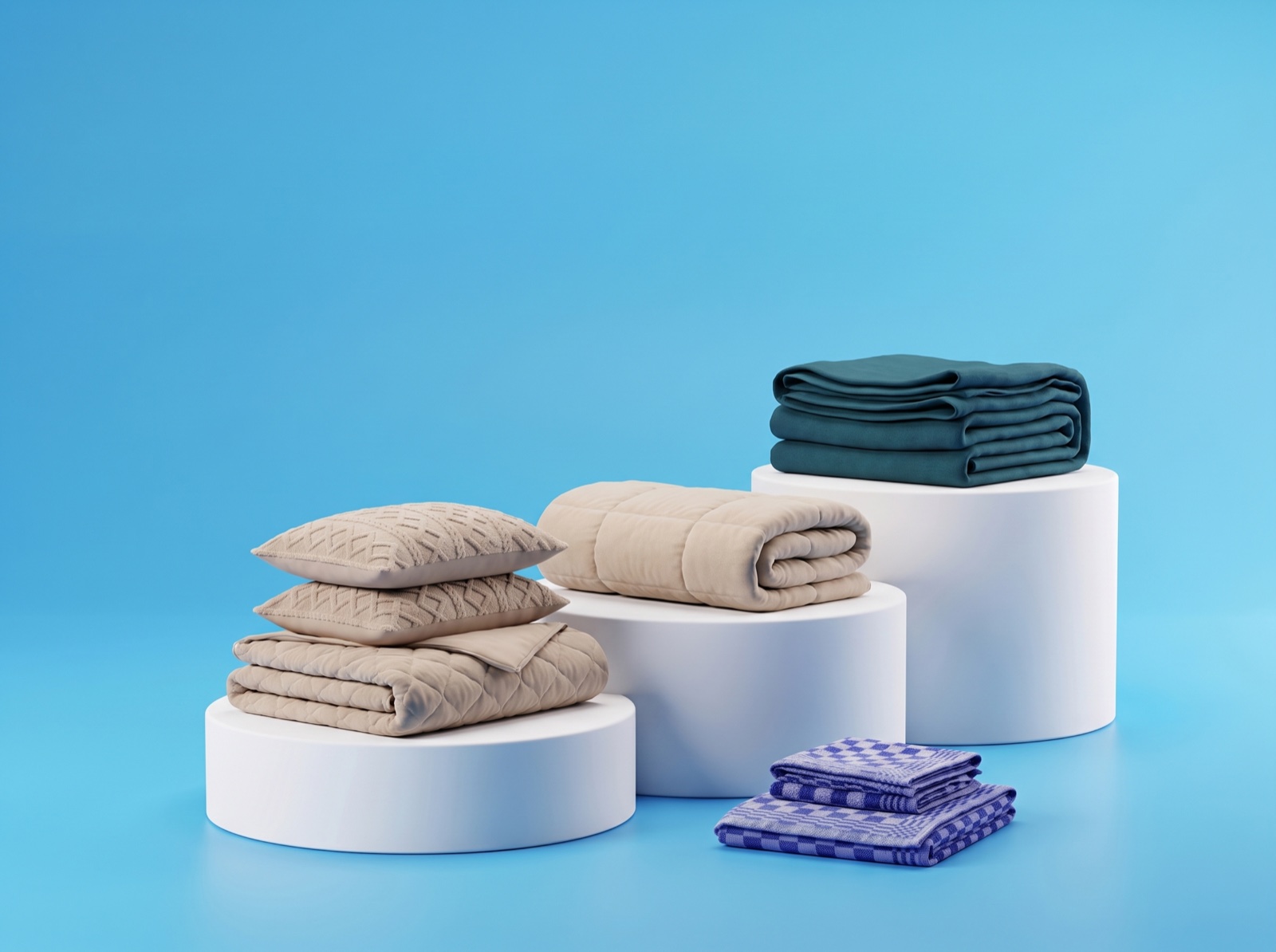










A muslin duvet cover is made from a loosely woven, airy fabric with a naturally crumpled look. The crinkle is part of the design, so the end customer doesn't need to iron. For you as a buyer, the key difference lies in the fibre: cotton muslin or a muslin-look in microfibre.
What is muslin and who is it for?
Muslin is a fabric with an open, loose weave. As a result, the cover drapes softly, feels gentle against the skin and has a visible, relaxed texture. The creases are not a flaw. They give the bed the relaxed, homely look that customers choose the fabric for.
Muslin suits shops and webshops with a lifestyle focus, where the bed is part of a complete bedroom look. It also works for hotels and holiday parks with a rustic or boutique feel. For customers who want a crisp, smooth bed, percale or satin remains the better choice.
Cotton muslin or muslin-look in microfibre?
Cotton muslin is a natural fibre with an airy, soft handfeel. Muslin-look in microfibre is a polyester fabric that imitates the appearance. Buyers searching for a muslin microfibre duvet cover set often opt for the latter, as it is generally easier to care for. The choice depends on your target group and on how you present the fabric.

| Feature | Cotton muslin | Muslin-look microfibre |
|---|---|---|
| Fibre | Natural (cotton) | Synthetic (polyester) |
| Feel | Airy and natural | Soft and slightly smoother |
| Care | May shrink slightly, follow the washing instructions | Generally keeps its shape and dries quickly |
| Sales pitch | Natural fibre, authentic | Practical and easy to use |
The same trade-off between cotton and microfibre applies to winter fabrics. You can read how to approach it in our article on buying flannel duvet covers. Muslin is mainly a fabric for spring, summer and the in-between seasons. For the colder months, complete your shelf with a flannel duvet cover set.
Why is no-iron such a strong selling point?
Many customers see ironing as a reason to avoid bed linen. With muslin, that objection disappears, because the crumpled look is intentional. So you are not selling a crease-free fabric, but a fabric that doesn't need ironing.
For hotels and holiday parks, this can save time when making beds and in the laundry. Be honest about this on the product and in the product description. A customer expecting a smooth, ironed result will be disappointed. A customer looking for a relaxed, natural bed will see it as an advantage.
Which colours and combinations work for duvet covers, fitted sheets and pillowcases?
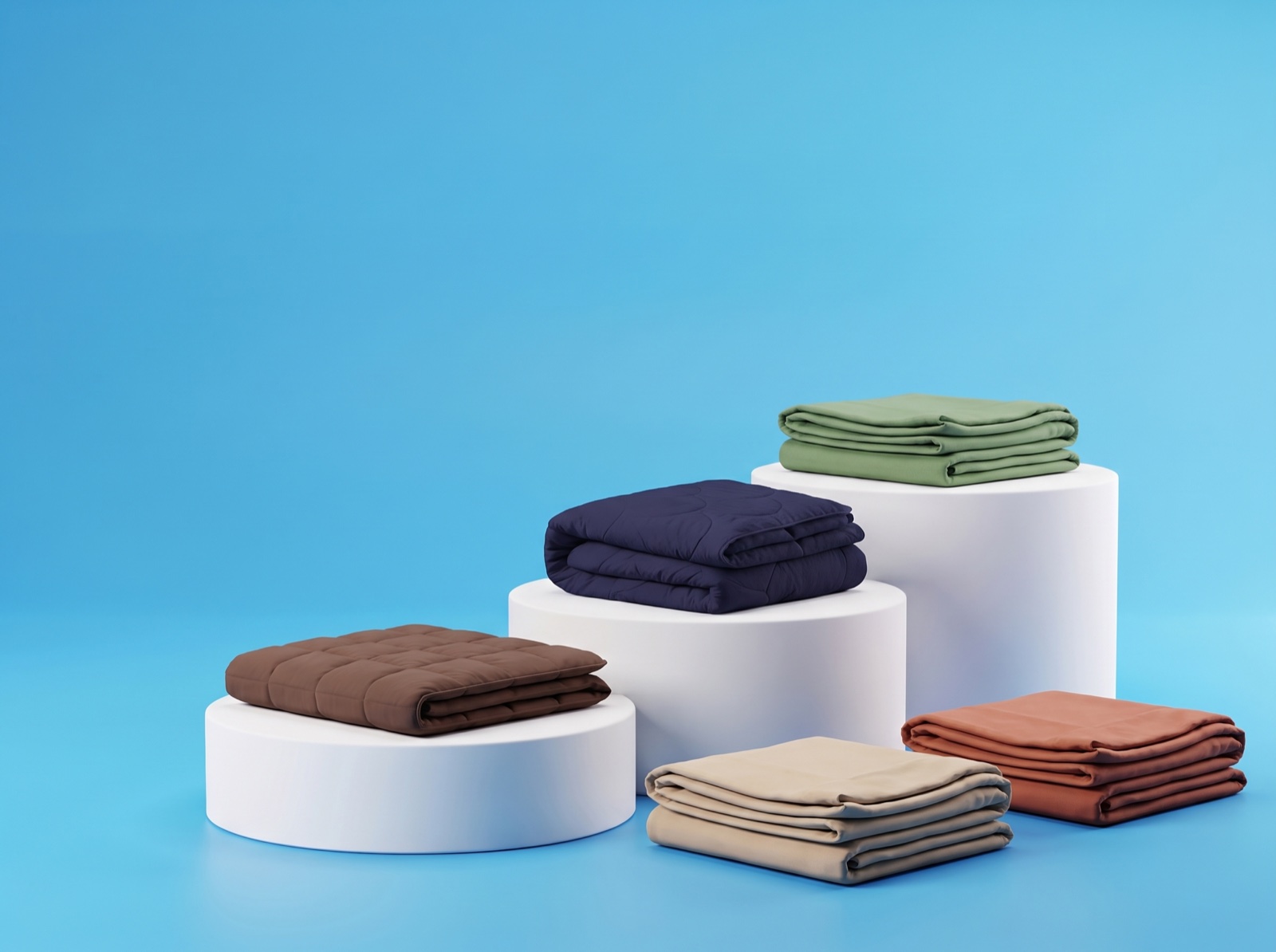
Muslin looks its best in calm, soft shades. Think white, ecru, sand, taupe, sage green or terracotta. The texture of the fabric already adds interest, so bright colours or busy prints are rarely necessary. You can find more on colour choice by fabric type in our article buying duvet covers: satin, percale, flannel and colour.
These points help when putting a set together:
- Keep the duvet cover and pillowcases in the same fabric and colour, so they still read as a set.
- Choose the fitted sheet tone-on-tone or one shade darker, rather than in a contrasting colour.
- Remember that the same colour looks different in muslin than in satin or percale, because the texture catches the light differently.
- Build a complete block for each colour family, so the customer finds the duvet cover, fitted sheet and pillowcases together.
- Display muslin next to a smooth alternative, so the difference in look is immediately visible.
You can find a complete range of duvet covers and sets in our duvet cover collection.
Frequently asked questions
Is a muslin duvet cover really no-iron?
Ironing is not necessary, because the crinkled look is part of the fabric. Even after washing, the cover keeps its relaxed, natural appearance. Anyone wanting a crisp, smooth bed is better off choosing percale or satin. State this clearly on the product, so customers know what to expect.
Is muslin suitable for hotels and holiday parks?
Muslin suits hotels and holiday parks with a rustic or relaxed feel well, as creases don't stand out in the look. Test your chosen fabric in your own washing process first and follow the washing instructions for each product. Microfibre is often practical, while cotton gives a more natural feel.
Can I combine muslin with satin or percale on one shelf?
You can, as long as you define the roles clearly. Muslin stands for a relaxed, homely look, satin for a smooth, glossy surface and percale for a fresh, matt and crisp finish. Present each fabric in its own block with its own colour family, so the customer understands the choice at a glance.
Can cotton muslin shrink?
Cotton may shrink slightly the first time it is washed, even in a loosely woven fabric. Follow the washing instructions on the label and make your customers aware of this. Shrinkage is generally less of an issue with microfibre. If you have any doubts about a product, request the specifications before you buy.
Are you a retailer, webshop owner, hotelier or park manager? Apply for a business account to browse our collection and put together your muslin range.